





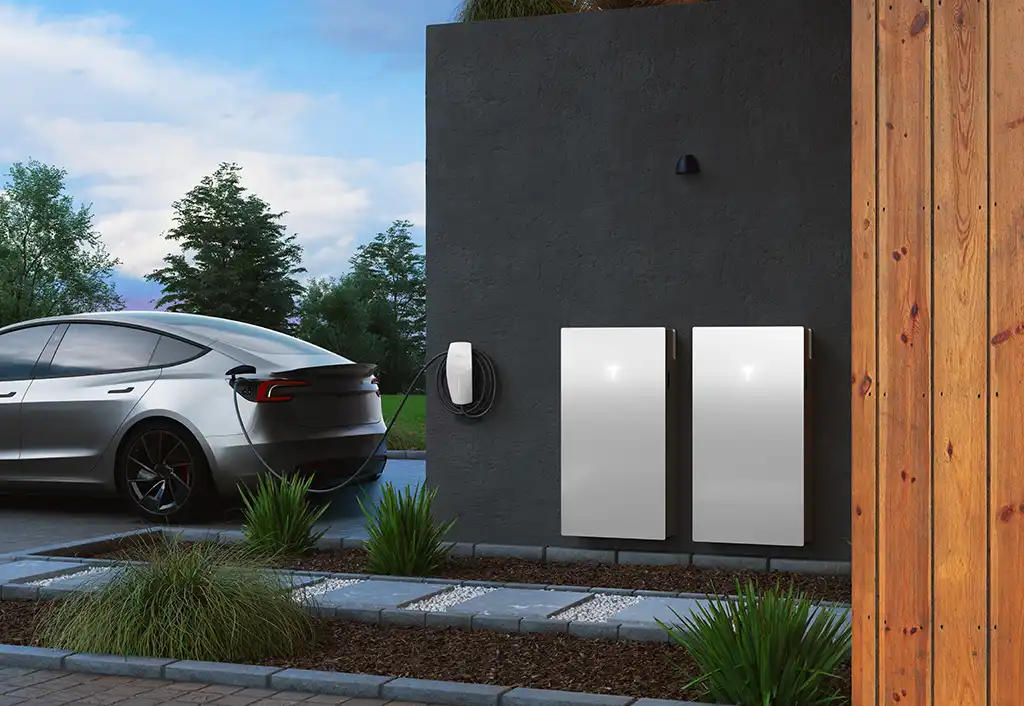
If you’re considering installing a solar battery bank for your solar power system, you have a lot of brands to choose from. However, there is one brand name that you’re likely already very familiar with—Tesla. This global manufacturer of electric cars also makes certain solar products, including the Powerwall, which is a popular option among those looking to install a battery bank. But having the biggest name doesn’t always mean it’s the best product for you. Keep reading to learn about 3 different battery brands that could be a better option.
Pytes Batteries
Unlike the Powerwall, Pytes batteries offer a modular design that’s far more flexible. You can build your battery bank to fit your exact energy storage needs, stacking battery modules as needed for the ideal battery bank. The Powerwall has a fixed capacity of 13.5 kWh, whether that’s the right amount of storage for you or not.
Pytes batteries also have a higher cycle life; they can provide over 6,000 charge-discharge cycles during their lifetime, while the Powerwall only offers between 4,000 and 5,000 cycles. Ultimately, this helps make Pytes batteries a more budget-friendly option by providing you a lower cost per kilowatt-hour, along with having a lower upfront price tag.
Enphase IQ Batteries
Enphase is another big name in solar, so they’ll cost a bit more than lesser-known brands like Pytes. However, they can still outperform the Powerwall in many ways. For starters, Enphase batteries use built-in microinverters, making them more efficient and more resilient than the Powerwall, which uses a centralized inverter. They also have more flexible sizing options, including 3.36 kWh and 10.08 kWh, making it easier to customize your battery bank based on your energy needs.
Fortress Power eVault Max
If you’re thinking you like the appeal of a single, large battery bank instead of a modular bank with stacking units, don’t assume the Powerwall is your only option. Fortress Power’s eVault Max has an even larger capacity than the Powerwall—18.5 kWh per unit, compared to the Powerwall’s 13.5 kWh. Fortress Power also uses LiFePO4 battery technology, which is known for being safer, more durable, and more thermally stable than Tesla’s NMC battery chemistry. It also offers a higher peak power output, delivering more continuous power as well as more robust peak power, which is ideal for those high-demand appliances.
Ultimately, the right battery for you is going to depend on a number of factors, from your system’s design to your personal priorities and your budget. Just remember that a familiar brand name doesn’t always equate to the best option. Whether you choose to buy Pytes batteries, Enphase IQ batteries, the Fortress Power eVault Max, or stick with the Powerwall, take the time to compare all of your options before making a final decision.








Leave a comment