





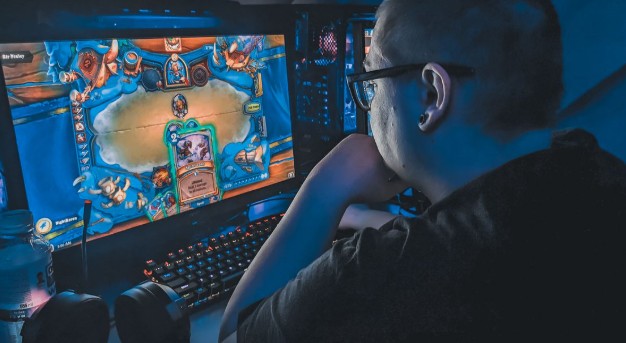
Have you ever logged into a game and realized you were really showing up to hang out with people?
That shift says a lot about how online gaming has changed. For many players, games are no longer just about scores, quests, or quick matches. They are places where friends meet after work, classmates keep in touch, and strangers become regulars in the same shared space.
What makes it interesting is how natural that change feels. As voice chat, text chat, live events, and player-made groups became normal parts of gaming, online play started to look less like a hobby done alone and more like a digital version of meeting up.
Why Games Started Feeling Social
It did not happen all at once, but the pattern is easy to see.
Early online play focused mostly on competition or teamwork tied to a single match. Over time, games added systems that kept people connected before, during, and after play. Friends lists, party tools, private chat, shared goals, and regular events gave people a reason to return even when they were not focused on winning.
That matters because people build habits around easy, repeated contact. If a space makes it simple to say hello, join a group, or spend twenty minutes together, it starts acting like a social venue. In that sense, online games fill some of the same role once handled by malls, parks, or neighborhood hangouts.
More Than A Match
A lot of players now treat gaming sessions like planned meetups. Someone logs in first, others join a voice channel, and the conversation starts before the game itself does. Sometimes the group plays seriously. Sometimes they just chat while doing routine tasks on screen.
That kind of casual interaction is a big reason gaming became sticky as a social habit. People are not always there for intense action. Often, they are there for company.
How Shared Activities Build Real Connection
The social pull gets stronger when people do things together.
Psychologists have long pointed out that shared tasks help people bond. Online games create that effect in a very direct way. Players solve problems, react under pressure, celebrate small wins, and laugh at mistakes in real time. Those moments can feel surprisingly personal because they happen live and require cooperation.
Even simple routines matter. Logging in every evening to complete a challenge with the same people creates familiarity. Inside jokes form. People learn each other’s timing, humor, and moods. Over time, the game becomes the setting for a relationship, not the full point of it.
Low Pressure Social Space
Games also give people something to do while they talk, which can make conversation easier. For some, speaking face to face feels intense or awkward. Talking while completing a mission or building something together lowers that pressure. The activity carries part of the social load.
You can even see the wider internet treating games as meeting spots, with links and invites passed around as casually as any chat room, sometimes alongside plain references like https://www.gol88.com/ when people swap places to spend time online.
Why Gaming Works As A Digital Third Place
One idea helps explain the shift very well.
Sociologists often talk about the “third place,” meaning a social setting outside home and work where people gather informally. Online gaming now serves a similar role for many users. It offers regular contact, familiar faces, and a reason to show up without needing a formal invitation every time.
That function matters more as many traditional public hangouts become harder to access because of time, distance, cost, or busy schedules. A game can be open at any hour, reachable from home, and flexible enough for a short visit or a long session.
Routine Creates Community
The strongest digital gathering places are built on repetition. When players return to the same server, guild, squad, or social hub, they begin to recognize names and personalities. That repeated contact turns a random crowd into a community.
Communities grow stronger when people feel seen. A quick greeting, an invite to join, or someone noticing your absence can make an online space feel surprisingly warm. Those small signals are a big part of why people keep coming back.
What Makes These Spaces Different From Social Media
Games create a different kind of interaction than a scrolling feed.
On many social platforms, communication is built around posting, reacting, and performing for an audience. Online games tend to center on doing things together in the same moment. The focus is active rather than passive, which often makes the contact feel more immediate and less staged.
There is also more room for gradual connection. People do not need to share personal details right away. They can first become known as the person who always helps, tells funny stories, or stays calm under pressure. Identity forms through action as much as words.
Friendship Through Participation
That is one reason gaming friendships can feel durable. They are often built through repeated participation, not just exchanged messages. When people spend weeks or months cooperating in a shared space, trust develops in a practical way.
That does not mean every gaming community is perfect, of course. But at their best, these spaces offer conversation, routine, and belonging in a format that fits modern life.
Where This Social Shift May Lead
The pattern already looks bigger than entertainment alone.
As online spaces keep blending play, communication, and community, games are likely to remain important social venues. They are accessible, flexible, and built around interaction. For younger people especially, meeting inside a game can feel just as normal as meeting in a group chat or at a cafe.
The bigger point is simple: online gaming became a new kind of digital gathering place because it gives people a shared activity, a familiar setting, and regular contact. When those three things come together, a game stops being just a pastime and starts feeling like somewhere you go to be with people.





Leave a comment